
Tracing Former Owners of a Butte County Property
Ownership history hangs on instruments tied to one legal description. The current Butte County Parcel Map gives you a parcel ID and legal fields. Its mailing-owner line is only a clue, never a link in the chain. The Clerk/Auditor/Recorder at 205 W. Grand Avenue in Arco handles current recordings. The office publishes no online recorder index, so requests go by phone or mail. FamilySearch covers 1882 through 1970. The Idaho State Archives reports county land and property holdings reaching back to 1863. Before 1917, the trail may run through Bingham, Blaine, Jefferson, or Custer records. Butte County was created in 1917.
| Transfer Date | Grantor → Grantee | Deed Type | Reference to Capture |
|---|---|---|---|
| Newest recorded date | Seller or transferor → current grantee | Warranty, quitclaim, trustee, tax, or other deed | Instrument or book/page; legal description |
| Prior acquisition date | Earlier grantor → that seller | Acquisition instrument | Instrument or book/page; marginal references |
| Earlier transfer | Prior grantor → prior grantee | Deed or court/probate transfer | Volume, page, film, image, legal description |
| Jurisdiction transition | Predecessor-county parties | Historic deed, patent, or order | County, archive collection, book and page |
Post-1970 transfers begin with a call or letter to the Recorder. Supply names, the parcel ID, legal description, approximate dates, and the instrument types you want. For 1882 through 1970, inspect the FamilySearch images. Record the film, volume, image number, parties, dates, and marginal references. Earlier gaps call for an Archives request plus a predecessor-county search. Never assume that no transfer took place.
Walking the Butte County Deed Chain Backward
Begin with the newest recorded deed, not the GIS mailing name. At every link, keep exact spellings for entities, trusts, estates, and personal names. Chains often branch. A transfer can pass through probate, trustee, tax, or court instruments, so chase related releases, assignments, plats, easements, mortgages, lis pendens, judgments, and probate orders on their own.
- Request the newest deed for the parcel, where the present acquirer appears as grantee
- Read the grantor, legal description, recording date, deed type, and recording reference
- Request that grantor’s acquisition deed, where the same party appeared as grantee
- Repeat into FamilySearch, deed books, archives, and predecessor jurisdictions as the date requires
- Grantor / grantee
- The conveying and receiving parties on a deed.
- Chain of title
- The linked sequence of recorded transfers.
- Legal description
- Land text that persists when street labels change.
How Far Back Butte County Ownership Records Go
The online collection runs from 1882 to 1970 and holds 23,226 images. That span still promises nothing about any single deed or year. Idaho State Archives microfilm and finding aids can fill some holes. Before Butte County's creation on February 6, 1917, transactions may sit in Bingham, Blaine, or Jefferson County records. Local history notes a later Clyde-area change involving Custer. Newspapers and Moore-area directories offer spelling and place clues. They never replace the instrument itself.
Lawful use. Research ownership history for lawful property diligence, estate work, and local history. Never use names or addresses to stalk, harass, threaten, or harm anyone.
Three Eras for Butte County Previous Owners
The date drives the search channel. For post-1970 and current instruments, use the Butte County Clerk/Auditor/Recorder by phone, counter, mail, or signed county request. The office publishes no official web index. For 1882 through 1970, use the FamilySearch Butte County collection along with the courthouse or Archives. Before 1882, start with archive and predecessor-county catalogs. No continuous online Butte image run exists. Match the era to the channel.
A coverage range is not a completeness promise. Some images sit unindexed, arranged by book, illegible, or missing from name search entirely. Browse the likely volumes and read the image. An empty index result never proves a former owner absent.
Request the Current Butte County Chain First
Start with the current chain. Call the Clerk/Auditor/Recorder at (208) 527-3021 ext. 1, or write PO Box 737, Arco ID 83213. Give the parcel legal description, known current and prior names, approximate dates, and the instrument classes you need. Ask staff to identify deeds, mortgages, assignments, releases or reconveyances, easements, plats, liens, lis pendens, judgments, tax deeds, and anything else affecting the land.
The county public-record request form wants contact information, an inspection-or-copy choice, a precise description, a signature, and an acknowledgement about mailing and telephone lists. The form lists no email, fax, or fee schedule. Confirm delivery and copy charges before sending anything.
Record Every Historical Image's Context
Every historical image deserves full context. For each deed or probate record, keep the collection title, county, book or volume, film and image number, grantor, grantee, instrument type, execution date, acknowledgment date, and recording date. Also note the legal description, consideration, notary, marginal references, indexing notes, and any illegible text. Those details make the prior-owner link reproducible. They also reveal when two similarly named parties are different people.
FamilySearch supports name and place searching plus a browse-all-images mode. Begin broadly. Try spelling variants and abbreviations, then open the image itself. An index snippet is a lead. The deed image and its recording context are the evidence.
Cross the 1917 County Boundary Carefully
Butte County was established February 6, 1917. It drew land from Bingham, Blaine, and Jefferson Counties. Local historical material also identifies a 1937 Clyde-area transfer from Custer. A chain reaching past county creation may continue in one of those jurisdictions. The land now lies in Butte County. Township, range, section, subdivision, block, lot, metes-and-bounds text, and names all help you pick the right earlier catalog. Verify the historical boundary rather than searching every neighbor at random. "No Butte record" before formation means the custodian may differ. It does not mean the conveyance never happened.
Use Idaho State Archives for the Older Chain
The Idaho State Archives reports county land, property, court, and tax holdings reaching back to 1863, plus microfilm and finding aids. The online catalog does not cover every collection. A strong request names Butte County or its predecessor, the legal description, approximate year, grantor, grantee or decedent, the record type wanted, and whether you need catalog, finding-aid, microfilm, newspaper, directory, or image work.
The Archives describes 30 minutes of complimentary reference work. Extra research is charged by the half-hour. Ask about scans, copies, microfilm, interlibrary loan, and finding aids before authorizing paid time. Tax or directory material can point to a lead. Only the instrument completes a deed-chain link.
When Probate or Court Orders Interrupt the Chain
Court-directed transfers can hide a former owner from ordinary deed searches. In Butte County, land often moved through probate, a trustee action, a tax deed, foreclosure, partition, or a quiet-title order. That was common here. It was not always a standard sale. Each of those paths leaves its own paper trail. Search the Idaho iCourt Portal by party name, case number, or case type to find public cases. Then request the full file from the Butte County District Court.
Write down the case number, county, caption, case type, filing date, register-of-actions entry, and the order itself. Note the recording reference too. A portal docket is not the recorded conveyance. Sealed or exempt records stay out of public view. Close the loop at the Recorder. The resulting deed, personal representative instrument, or order affecting real estate is filed there.
Directories and Newspapers Find Names, Not Owners
Old newspapers fill gaps that deed records leave open. The University of Idaho microfilm list identifies the Arco Advertiser from March 12, 1909 through March 1959, incomplete. Coverage continues from April 1959 to the present. Legal notices, probate notices, tax sales, subdivision hearings, and property advertisements surface dates and name variants. Test those variants against recorded instruments.
State Archives telephone-directory holdings cover Arco in several 1964–1967 and 1973 volumes. They also include mixed Lost River communities. A directory can tie a person or business to a period address. It cannot establish parcel ownership, legal boundaries, or continuous residence. Treat it as a historical lead. Then confirm with the deed book, probate file, or recorded plat for Butte County property records.
The Idaho State Archives access page is the official starting point for older Butte County and predecessor-county research.
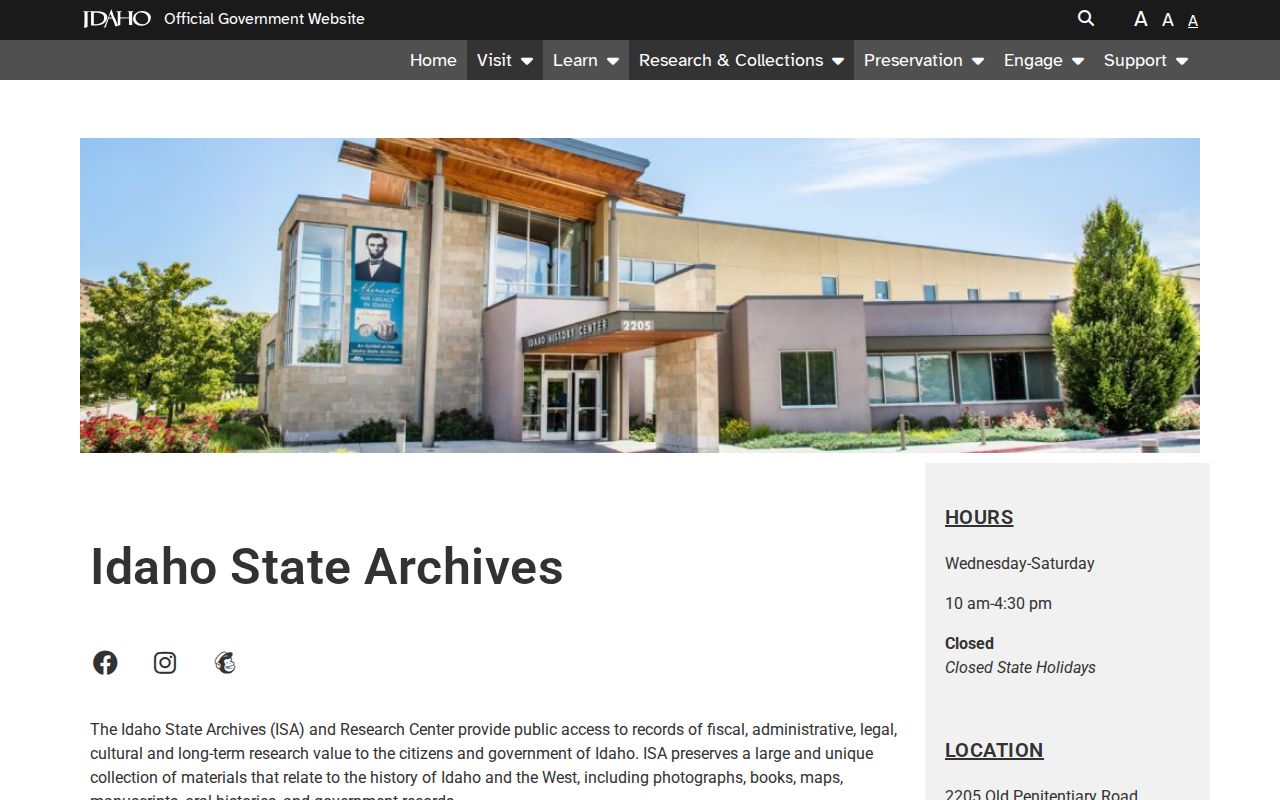
The Archives page opens the historical route, not a specific ownership answer. When you contact staff, submit the legal description, names, date range, record type, and any predecessor-county possibility. They can then point you to the right collection or finding aid.
Audit every transition at the end of the backward chain. The grantee on one acquisition should normally reappear as the grantor on the later conveyance. The same land should carry through the legal description. Where names, acreage, or land text change, hunt for a plat, split, combination, probate order, correction deed, or boundary instrument. Do this rather than forcing a continuous sequence. Mark unresolved links as gaps and keep the custodian response on file.